
Narodnaia kartinka XVIII – nachala XIX veka (Popular prints of the 18th and 19th century)
St. Petersburg. Sewn cl. More

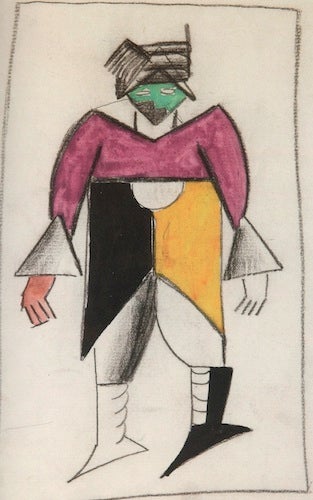
Bronze Horseman imports books that publish collections of lacquer boxes, painted trays, wooden toys, embroidered costume, lace, painted furniture and utensils (e.g., distaffs), popular prints, and other forms of Russian folk art. In such a large country, independent regional forms naturally arose and are still being studied. Scholars at Russian museums publish their research on folk art for its own aesthetic interest and for its relation to other branches of art such as icon-painting and the Russian avant-garde of the early twentieth century. Natalia Goncharova thought that Russian folk painting was akin to forms of cubism, which to others seemed a discovery of Picasso and Braque, and Kandinsky living abroad would write to his friends in Russia imploring them to send him lubki, popular prints characterized by a naïve folk style of forceful bold colors and simplified images. Another form of folk art, shop signs, is the theme of a beautifully illustrated monograph, Russian Painted Shop Signs and Avant-Garde Artists.
St. Petersburg. Sewn cl. More
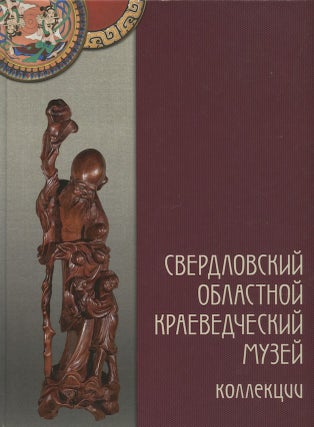
Ekaterinburg: Kvadrat, 2016. Sewn cl. This catalogue of highlights of a provincial museum publishes rare books, photography, coins and medals, arms and armor, glass and ceramics, bronze sculpture, prints and icons. Many of the works come from private collections of the Ural Mountain region nationalized after the 1917 revolution. 111..... More
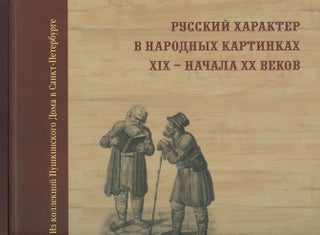
St. Petersburg: Pushkinskii dom, 2013. sewn bp. The Pushkin House (Institute of Russian Literature) has surprisingly rich collections of visual that are seldom on display. Hence a catalogue reproducing popular prints illustrating tales from folklore does more than just unfold a theme: it makes accessible visual documents that in strong..... More

St. Petersburg: Rus muz, 2096. Sewn cl. Three chapters on costume and textiles, a chapter on toys, one on painted distaffs and trunks, and another on icons shows the breadth of arts produced by the folk imagination one region of the Russian Empire. Beautifully illustrated and printed in Italy.94 pages..... More
St. Petersburg: Rus muz, 2004. Sewn cl. 182 p., 29 cm, More

St. Petersburg: Rus muz, 2007. Sewn cl. The miniature paintings on lacquered boxes, wood carving for tools and ornamentation, ceramic works enlivened by floral and geometric patterns, sculpted wooden icons are among the works published in this overview of the Russian Museum's collection of folk art. Most works are by..... More
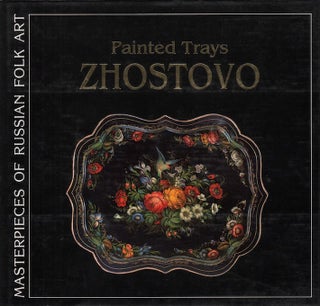
Moscow: Interbuk, 1994. Sewn cl. This album publishes beautiful works of lacquer paintings dating to the second half of the nineteenth and first half of the twentieth century. "Zhostovo" refers to the town where the craft developed. The sinuous floral patterns are conventionally painted against a black background and are..... More
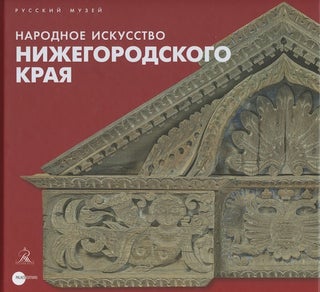
St. Petersburg: Rus muz, 2017. Sewn cl. The region of the lower Volga River distant from the westernized imperial capital of St. Petersburg preserved traditions of adorning everyday tools, carving architectural details, sculpting religious figures, embroidering clothing, and making lace long after these traditions died out in other parts of..... More
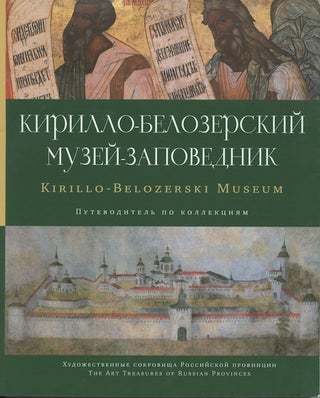
Moscow: Tri kvadrata, 2017. Sewn pb. This edition in the Tri kvadrat's unique series of collection catalogues of museums around Russia publishes works housed at the St. Cyril Belozersk Monastery. Among the extraordinary works of art and artifacts are painted tiles dating to the 17th through the 19th centuries; reliefs..... More

St. Petersburg: Rus muz, 2011. Sewn cl. This book describes the way private collectors gravitated toward traditional culture, building major collections of applied and decorative arts, many of which ended up in the Russian Museum. The authors outline the collectors' work and publish examples of ceramics, wood carving, costume and..... More

St. Petersburg: Rus muz, 2007. Sewn cl. This album publishes vivid examples from the the 1849s through the 1990s of enamel painting from the folk art center of Zhostovo, The early works are of great variety: snuff boxes with the portrait of Peter the Great, jewelry boxes with winter landscapes..... More
St. Petersburg: Rus muz, 2001. Sewn cl. Closely related to lubki (popular prints) the flat rectangular wooden surfaces of distaffs were ideal for painting. Colorful geometric patterns reminiscent of American Indian art, still-lives of flowing bouquets of flowers, and genre scenes of dining, tea drinking, sledding, and hunting represent the..... More
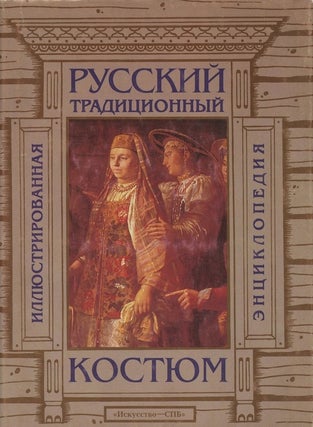
St. Petersburg: "Isskustvo-SPB" 2006. Sewn cl. The drawings of individual items of clothing juxtaposed with archival photos of peasants gives a palpable sense of the imaginative designs current up through the early twentieth century among the rural population or peasantry. Clothing indicated distinctions of various kinds such as married or..... More
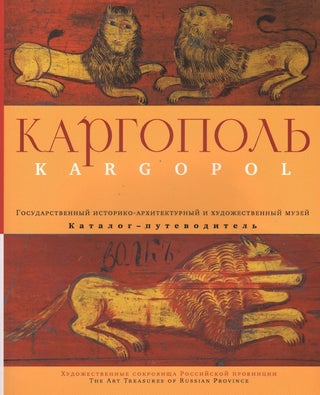
Moscow: Tri kvadrata, 2011. pb. The chapters of this book cover different departments of the rich but seldom seen collections of the Kargopol Museum. Some of the works stem from the life style of the peasantry: household crafts like molding clay into toys, which filled the long winter nights; painted..... More
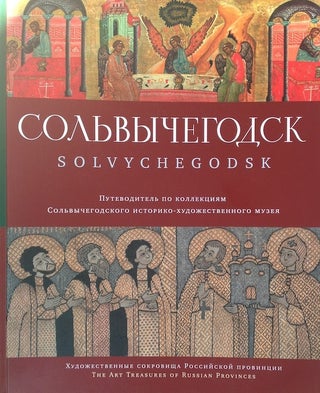
Moscow: Tri kvadrata, 2015. pb. This catalogue of a provincial museum publishes many and varied works of folk and fine art. Carved iconostasis of the seventeenth century and eighteenth-century; wooden sculpture of angels, saints, and the evangelists which show the talent of wood carvers who created strong images akin to..... More
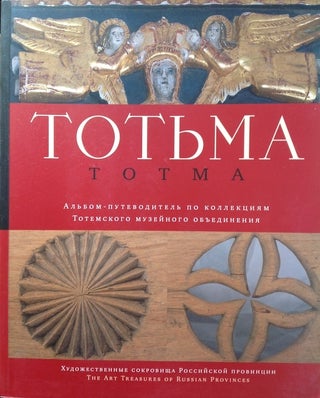
Moscow: Tri kvadrata, 2015. pb. When the Russian town of Tot'ma became part of the northern river route it was a hub of trade between Western Europe, European Russia, and Siberia, and its merchants thrived and even sponsored trading expeditions to Russian America. The town had the wealth and patronage..... More

Moscow: V. Shevchuk, 2010. Sewn pb. The author has compiled a beautiful array of motifs used in architecture and in the design of ceramics, wood carving, textiles, and costume. 207 p., 21 cm, approx. 150 color and b/w illus., Rus. More